


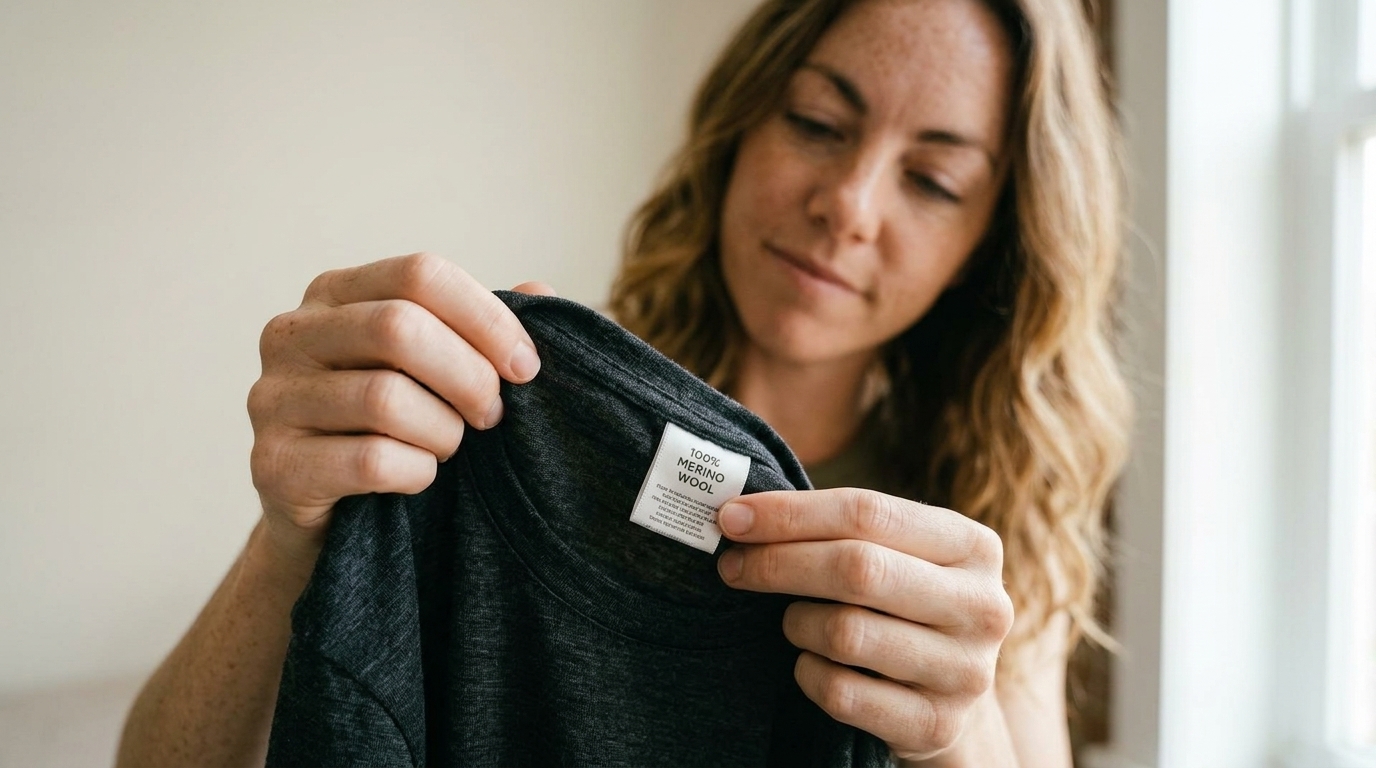
Packing light forces a hard question on every garment you own: what is it made of, and will it survive months of hand-washing in a hostel sink? The answer is on the tag, but only if you know how to read it.
The rule is simple. The lead fibre is the fabric’s job. The trace fibre is the tweak. Read the lead, ignore the marketing.
Merino wool: the traveller’s base layer
Merino resists odour, regulates temperature, and dries fine for a wool. It is slower to dry than synthetics but smells far less, which matters more when you are washing by hand and wearing something for the third day in a row. Look for a fine micron count and either 100% merino or a merino-synthetic blend. A pure merino tee can go a week between washes without offending anyone.
Nylon vs polyester
- Nylon (polyamide): tougher and more abrasion-resistant. Better for trousers, shells, and bags. Holds a little more water.
- Polyester: lighter, dries faster, cheaper. Great for tees, liners, and anything that gets sweaty.
Both dry quickly, which is the point when your only dryer is a towel and a windowsill.
Elastane: a pinch, never a lot
Elastane (also sold as Spandex or Lycra) adds stretch and recovery. Two to five percent is plenty for trousers and layers. Above roughly ten percent, the garment starts to sag and dies young. If a label leads with elastane, put it back.
The blend decoder
A few examples, read as a sentence:
- 95% nylon / 5% elastane: a tough fabric with a bit of stretch. Good travel trousers.
- 100% merino: a base layer that stays fresh for days.
- 60% cotton / 40% polyester: a slow-drying trap for hand-wash travel. Leave it home.
- 88% polyester / 12% elastane: too much stretch. It will lose its shape.
Three quick tests before you buy
- Would it survive a cold sink wash and an overnight dry?
- Does the lead fibre match how you will wear it?
- Does it earn its weight in the bag, or is it a maybe?
Put this to work inside the 7-piece digital nomad capsule wardrobe, where every item earns its place by fabric rather than by logo. When the weather turns, the shell jacket guide covers the one outer layer worth packing.
Read the tag like a sentence, and you will build a wardrobe that survives the trip, not just the photo.
