


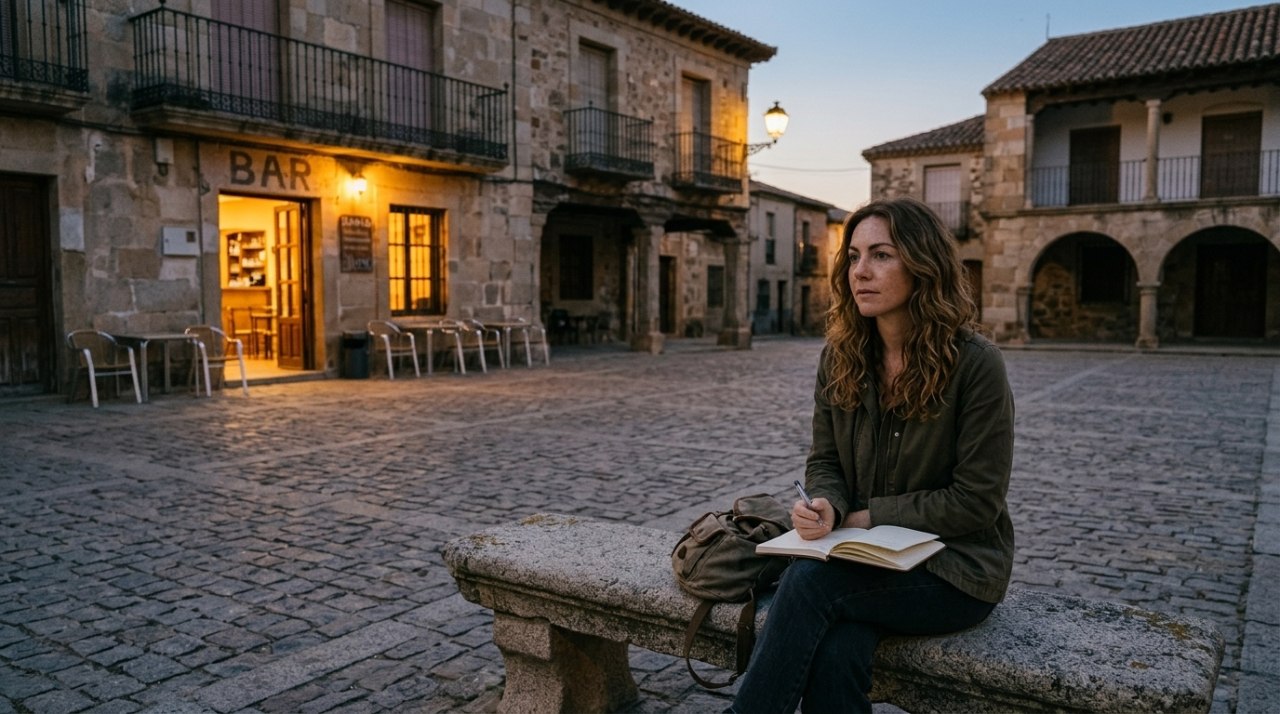
The notebook has a rubber band round it and a coffee ring on the cover the size of a fifty-peso coin. I found it in March, unpacking a box in a rented flat in Valparaíso, and ended up sitting on the floor for twenty minutes turning pages. Forty-one of them, in three inks, plus a hand-drawn map of the Beagle Channel so badly proportioned that the Chilean coast looks like a bad temper.
Three weeks of my life went into that notebook. Two of them at a kitchen table in Punta Arenas, where the wind leaned on the window at seventy kilometres an hour and the wifi surrendered every evening around nine.
I was planning Antarctica. Not buying a package. Planning, which turns out to be a different job.
The part nobody puts in the brochure
Antarctica is the least improvised place I have ever been. You cannot arrive and figure it out. There is no bus, no strip of hostels, no man at the dock undercutting the others. The questions arrive in a stack, and each one costs real money to get wrong.
When to go, first. December brings penguin chicks, gentoo and chinstrap, and twenty hours of light. February brings whales into the Gerlache Strait and penguins already fledged and gone. I chose late December because I wanted chicks and could live without whales, a trade I could only make once I had read enough to see that it was a trade.
Then the ship. Anything carrying more than 500 passengers cannot put anybody ashore, and that is an IAATO rule rather than a suggestion. I wanted a vessel small enough to land everyone at once, which meant under 200. One line in the notebook deleted two-thirds of the departures I had been circling. The AFAR guide to expedition cruises sat open in tab six for most of a week and is the reason I knew to ask the question at all.
Then the money. A berth booked eleven months out through a European agent ran to $11,400, twin share, deck four. A walk-up berth bought in Ushuaia in the last ten days of the season went for $6,000, and once for $5,200 if you would sleep in a triple. You pay for that saving in flexibility, in gear you left at home, in flights rebooked at two in the morning.
I also wrote down evacuation insurance with a $150,000 minimum, a dry bag, two sets of glove liners, the name of a woman at the operator’s office in Ushuaia, and the number of a broker in Punta Arenas who answered on the fourth ring and knew exactly which cabin I meant.
A machine will tell you February is good for whales. It will not tell you the kayak slots sold out in September, or that your charter to Ushuaia leaves at six in the morning and the airline will move your connection without mentioning it.
What the researchers found
Last month, on the train between Viña del Mar and Santiago, I read about a paper given at the Conference on Language Modeling. The title is refreshingly blunt: AI assistance reduces persistence and hurts independent performance. The setup was simple. People worked through problems with a helper at their elbow, then faced fresh problems alone. Those who had used the helper quit sooner and solved less. The help was real in the moment and corrosive afterwards, because what got trained was not the answer but the tolerance for not having one.
Cal Newport has been circling this idea for years and I have read enough of him to arrive with a bias. What actually convinced me was the memory of my own voyage.
That trip failed more than any other I have taken. The charter flight slipped four hours. We lost our first landing to a forty-five knot wind. My waterproof trousers split at the seam on day two and I spent an hour with duct tape in a cabin that smelled of wet wool. And still I can draw the route from memory: the Beagle Channel at first light, the Drake in the flat calm they call the lake, Neko Harbour at seven in the morning with the glacier cracking across the water, the Lemaire Channel so narrow the ship’s shadow touched both shores.
I remember it because I built it. Not because I built it well. Because badly, slowly, over three weeks, with eleven browser tabs and forty-one pages of ink.
The twelve-second itinerary
Now when friends ask about Antarctica, I watch them type a question into a chat window and receive twelve tidy bullet points in nine seconds. The bullet points are correct. They are also frictionless, and friction was the syllabus. Nobody in that window mentions that the cheapest cabin sits above the engine, or that “landings subject to weather” is a clause to read out loud before paying a deposit, or that a $400 change fee is a rounding error against the price of missing the boat.
I still use these tools. Last week one of them drafted a stiff email to a ferry company in Chile and translated a rental contract. That is typing. That is not deciding. The decisions I want to keep slightly difficult, because difficulty is where I learn the shape of a place.
A small practice
If you are planning something hard this year, try this. Give the first hour to a paper notebook before you open a single tab. Write down the three decisions that would be expensive to get wrong, then go find a person who knows: an operator, a ranger, a broker with a phone number and a regional accent. Ask the dumb question. Write the answer in your own bad handwriting.
The itinerary you build that way will look worse on paper. It will have crossings-out and a coffee ring on the cover. It will also be yours, and you will still be able to read it years later, sitting on a floor somewhere, remembering exactly why the coast looked like a bad temper.
