


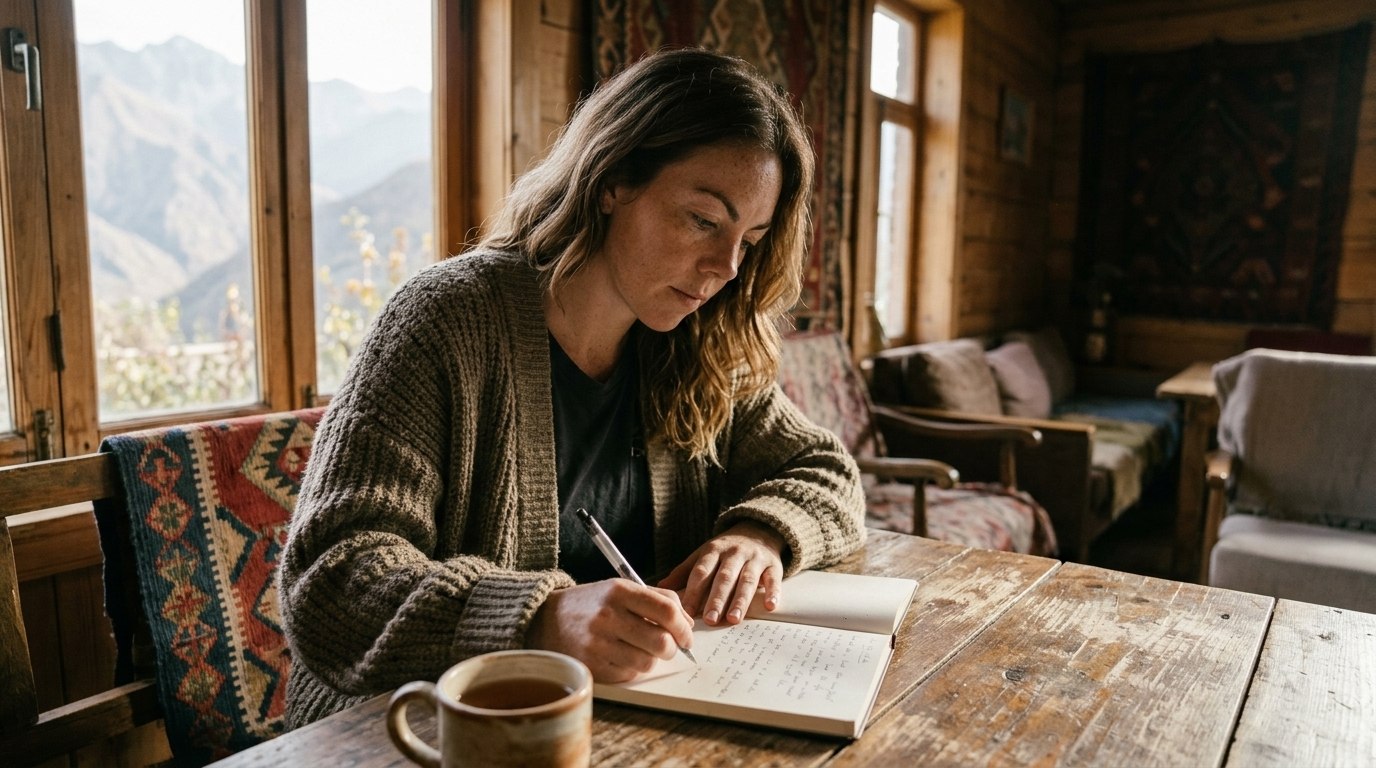
The deck of the cabin I rent in Tahoe City faces west. At 6:40 in the morning in late October it is 38 degrees and the lake is the color of a nickel. I have coffee in one hand, a sheet of 80-grit in the other. On the sawhorses sits a 1974 fiberglass canoe I bought for $150 from a man in Kings Beach who told me it floated, mostly.
I have six weeks in this town. The canoe is the thing I have to finish, and I have to finish it without asking a machine for anything.
That last part is new. For most of the past month I had been outsourcing the small friction of my days. A substitute for buttermilk. Why the shower drain gurgles. Whether the pass would be icy at seven or at nine. A polite email to a landlord in Lisbon. None of it was hard, exactly, but every request shaved a minute off something, and after thirty days of it I noticed I had stopped beginning things. I would open the notebook, feel the first small resistance, and reach for the tab instead.
Then a paper landed that made me feel caught. Presented at the Conference on Language Modeling, it reported that people given AI assistance on a task persisted less, and performed worse on their own once the help was taken away. The setup is plain enough to be uncomfortable: work alongside the model, then work without it, and measure how long you keep going when the problem stops being friendly. The finding isn’t really about tools being bad. Persistence gets built in the stretch where you want to stop and don’t, and the assistant quietly deletes that stretch.
Cal Newport has been circling this argument for years, that sitting with a hard problem is a trained capacity and that we lose it through disuse. I have read him, nodded, and gone right on asking about the buttermilk. What the paper gave me was a shape: help first, then no help, then watch the willingness drain out. I ran that experiment on myself by accident this year, and I know how it ends.
So the rule now. Before I arrive anywhere I plan to stay a while, I choose one hard thing, sized to the stay, that cannot be broken into prompts. It has to be physical or at least stubbornly sequential. It needs a finish line I could photograph. And it has to be slightly beyond what I am confident I can do in the time available, or it isn’t hard, it’s just a chore with good lighting.
Length of stay does the rest of the work. The places I book run three to six months, and what that gives me is a fixed window with a real edge on it. Everything else moves: the apartment, the routine, the price of the coffee, the friends I make in week two and lose in week ten. One finished object does not move. Without it, six months can dissolve into a very pleasant blur of co-working desks and train tickets.
The canoe has eaten nineteen hours so far. Two patches on the hull where the old glass had gone soft, then a wait of twenty-four hours at above 60 degrees, which in October means a plywood box and a space heater in the garage and a thermometer I check like a nervous new parent. I sanded through the gelcoat in two places on day nine and said something unkind to a squirrel. Materials have cost $212. My forearms ache in a way that feels earned. Not once have I typed how to fair a hull into a search bar, and the not-typing is the whole point.
Autumn is the right season for this. The summer crowds thin out, the water goes flat and cold, and the days split cleanly into parts. A long hike in the morning while epoxy cures, an hour of paddling in the afternoon, and on the days my shoulders file complaints, a slow spa afternoon down in Olympic Valley. The guides I read before I came kept describing North Lake Tahoe in fall as long trails and lake time braided with quieter wellness days, a rhythm that rewards patience over speed. Sanding rewards patience too. So does waiting for resin.
Six weeks in one town is long enough to finish something and short enough that you cannot afford to drift.
What I notice most is how the hard thing has started leaking into the rest of the week. I answer emails faster and less fussily. I sit with a paragraph that isn’t working instead of pasting it somewhere for a fix. The resistance shows up around minute four, most days, and I have learned to do ten more minutes before deciding anything. That habit came off the sanding block, not out of an article.
If you want to try it, choose the project before you land, while you are still far enough away to be honest about your schedule. Write the finish line on paper and tape it where you make coffee. Tell one person in the town what you’re building, so someone notices when you go quiet. Keep a log in pen, with dates and hours and money spent. Then expect to be bad at it for a fortnight, and keep the receipt for the sandpaper.
